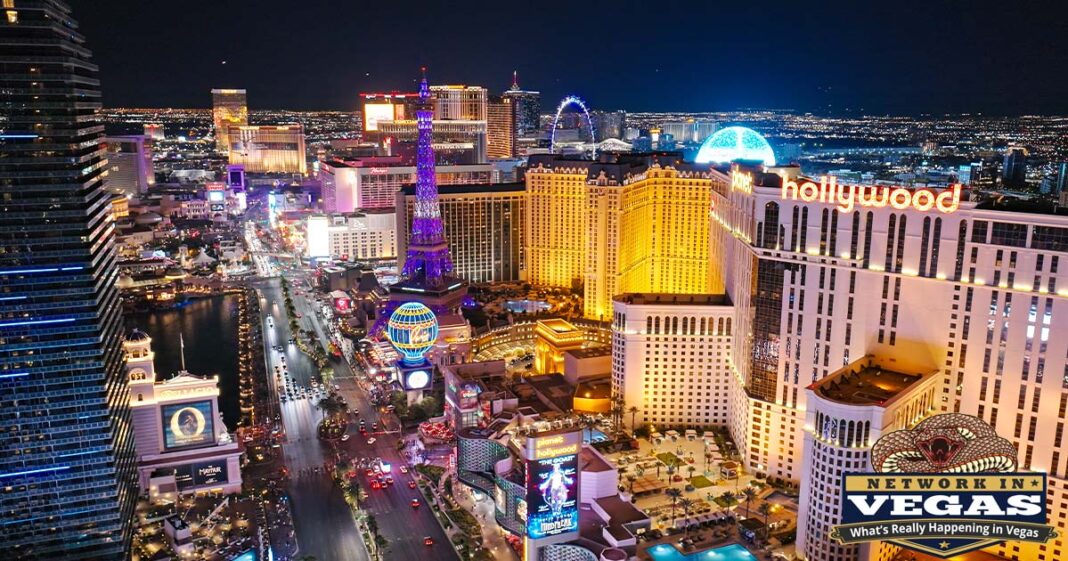
Caesars has a buyer. MGM has a takeover offer. The Rio has new majority ownership. None of that guarantees a better Las Vegas, but after years of corporate consolidation, fees, cutbacks and disappearing 24-hour service, a shake-up at the top may be exactly what this city needs.
Las Vegas is changing hands in a way we haven’t seen in a long time.
Caesars Entertainment has agreed to a $17.6 billion takeover by Tilman Fertitta’s Fertitta Entertainment. Barry Diller’s People Inc., formerly IAC, has made an offer to take MGM Resorts International private. And over at the Rio, private credit firm Kennedy Lewis Investment Management has already taken majority control from Dreamscape Companies.
Taken individually, each one is a business story. Put them together, and something much bigger is happening.
For years, an enormous portion of the Las Vegas Strip has been controlled by a small number of publicly traded casino companies running increasingly similar properties under increasingly similar corporate rules. Caesars and MGM became the two biggest examples of that system. Different signs out front, different themes left over from another era, but behind the scenes a lot of the same thinking: maximize room revenue, maximize fees, reduce labor costs, squeeze more money out of every square foot and make every department justify itself on a spreadsheet.
Maybe breaking up some of that corporate grip gives Las Vegas a chance to remember what made this city work in the first place.
And no, that doesn’t mean turning the Strip into a museum from 1978. It means remembering that Las Vegas became Las Vegas because this was the city that never shut down.
First, here’s what is actually happening
Caesars announced May 28 that it had entered into a definitive agreement to be acquired by Fertitta Entertainment for $31 per share. The deal is valued at approximately $17.6 billion, including the assumption of roughly $11.9 billion in Caesars debt. If completed, Caesars will become a privately held company and its shares will no longer trade on NASDAQ.
There was some late drama. Carl Icahn submitted a competing $34-per-share proposal during Caesars’ extended go-shop process, but his bid ran into financing and rollover-equity issues. Fertitta’s deal remains the one Caesars is moving forward with. That transaction still requires shareholder approval and remaining regulatory clearances, so saying Caesars has already been completely sold is getting a little ahead of things.
MGM is currently up in the air.
On June 1, People Inc. offered $48.30 per share in cash for the MGM shares it does not already own. Diller’s company currently owns about 26.1 percent of MGM, making it the company’s largest shareholder, and its proposal would take MGM private if a deal is ultimately reached. MGM confirmed receipt of the proposal and formed the process necessary to evaluate it, but as of now there is no completed transaction.
Then there is the Rio, where the change has already happened.
Kennedy Lewis Investment Management took majority control of the property earlier this year, leaving Dreamscape as a minority stakeholder. The ownership change was followed by a shake-up in management, including a new president and other senior executives.
Three properties and companies with very different circumstances, but all of them point toward something worth watching: Las Vegas casino ownership is changing.
Why any of this might actually be good news
We wrote last week about what killed 24-hour Las Vegas — the graveyard shifts that never came back, the coffee shops that stayed dark, the grab-and-go sandwich under a heat lamp where a real overnight restaurant used to be. COVID gets the blame, but the truth is COVID just gave operators permission to do what the spreadsheets had been begging them to do for years.
And the spreadsheets exist because of how these companies are structured.
When you’re public, every single line item has to justify itself to somebody who has never set foot in your building. The overnight coffee shop loses money on paper, so it dies. The buffet loses money on paper, so it dies. Free parking is revenue you’re leaving on the table, so it dies. The resort fee shows up because it lets you advertise a $99 room and collect $150. Blackjack goes to 6:5 because the hold percentage improves and nobody in the analyst call is going to ask about it.
Old Vegas understood something that got lost: not every piece of the building has to make money. The cheap steak and eggs was a loss leader that kept you in the building for six more hours. The free parking got you in the door. The whole property was the product, and the individual pieces were bait.
Private ownership doesn’t guarantee anybody remembers that. But it at least removes the quarterly gun from the operator’s head. Fertitta has said for years that he runs hospitality like a real estate business and thinks in decades. Diller’s entire pitch is that MGM’s physical assets are undervalued — which is a long-hold argument, not a squeeze-the-customer argument.
There’s a version of this where somebody looks at the numbers, sees that visitation fell 7.5 percent in 2025 to 38.5 million and has stayed basically flat through the first half of 2026, and decides the answer isn’t another fee. That the answer is giving people a reason to come back.
That would be a hell of a thing.
Now the part where I ruin it
Don’t get too excited.
Fertitta’s Golden Nugget Las Vegas charges a $46 per night resort fee. Non-hotel-guest parking there runs $25.99 Monday through Thursday and $50.99 on weekends. Free with validation, sure, and free for hotel guests, but the fee structure exists and it exists because it works.
The man buying Caesars is not a stranger to charging you for things that used to be free. And he’s about to be sitting on nearly $12 billion of assumed debt, which is not a situation that historically inspires generosity toward the customer. Private equity taking a company private usually means cost discipline, asset sales and margin optimization. It rarely means reopening the 24-hour lounge.
Diller is a media executive. Brilliant one. He has never run a casino floor in his life.
Kennedy Lewis is a private credit firm. They took the Rio because of how the debt shook out, not because somebody there has a dream about Brazilian-themed hospitality.
And the Culinary Union, which represents 35,000 workers across Caesars and MGM properties in Nevada, has already put out statements on both deals focused on protecting jobs and contract language — so expect these morons out there picketing any meaningful change.