
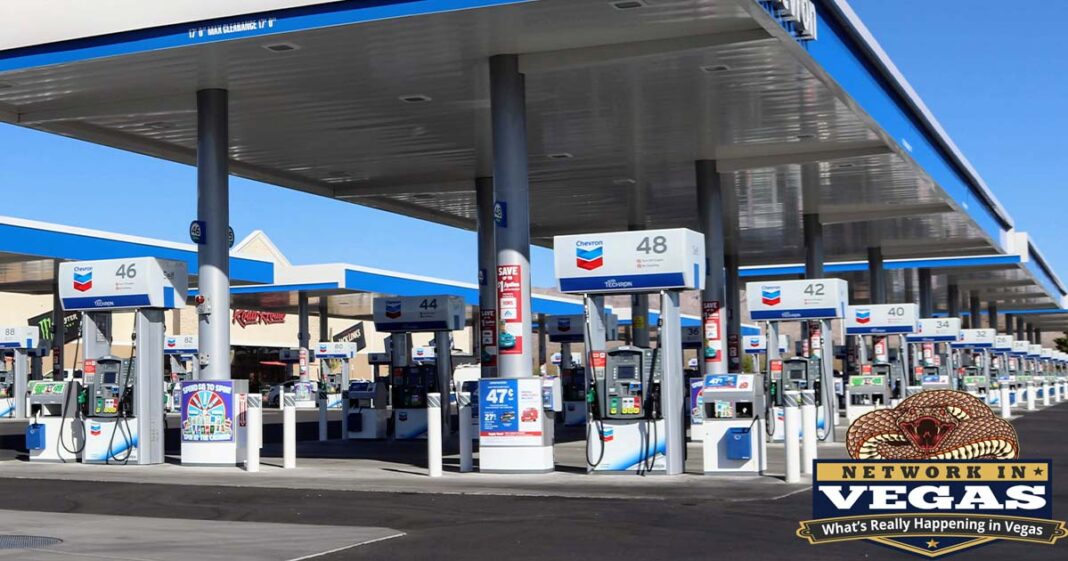
Las Vegas is already feeling the effects of the latest oil and fuel crisis, and the next couple of weeks could remain painful before we see any meaningful relief.
According to AAA, the Las Vegas average is now around $5.18 a gallon for regular gasoline and $6.67 for diesel. Regular was roughly $5.01 just a week ago and $4.77 a month ago. Diesel has moved even faster, climbing from around $6.36 a week ago and $5.79 a month ago.
That diesel number is especially concerning. At roughly $6.67 a gallon, Las Vegas diesel prices are sitting around record territory, while regular gasoline is now only about 40 cents below the record highs we saw during the 2022 energy crisis.
Why Las Vegas Is Especially Vulnerable
The biggest mistake people make when looking at gasoline prices is assuming Las Vegas will simply follow the national average.
Southern Nevada has a very different fuel supply situation than much of the country.
Las Vegas does not have a large local refining industry capable of producing enough gasoline and diesel for the valley. Instead, Southern Nevada receives much of its fuel through two major pipeline systems.
Southern Nevada doesn’t have a big local refining system. Las Vegas receives gasoline, diesel and jet fuel through the CALNEV pipeline from Southern California and the UNEV pipeline from Utah. California refineries supply most Nevada transportation fuel. That means something going wrong in Southern California can hit Vegas much harder than an equivalent refinery outage in Texas or Louisiana.
According to Nevada’s State Energy Security Plan, California refineries remain a major source of transportation fuel for Nevada.
This becomes a problem when California loses refining capacity.
Phillips 66 shut down its roughly 139,000-barrel-per-day Los Angeles refinery, while Valero shut down its roughly 145,000-barrel-per-day Benicia refinery. Combined, those facilities represented a significant percentage of California’s refining capacity.
That leaves fewer refineries supplying an already isolated West Coast fuel market.
If a remaining Southern California refinery suddenly goes offline, or if there is a pipeline problem affecting CALNEV, Las Vegas gasoline prices can jump much faster than prices in other parts of the country.
The Oil Crisis Is Still Far From Over
Crude oil remains extremely expensive.
Brent crude is trading around $104 a barrel, while West Texas Intermediate crude is around $101 a barrel.
Prices have come down slightly from the $108-$109 area reached earlier this week, but that doesn’t mean the underlying problems have disappeared.
The Saudi East-West Pipeline has been damaged, Saudi Arabia has canceled some October crude deliveries to European refiners, tanker traffic through the Strait of Hormuz remains disrupted, and Saudi Arabia has been attempting to reroute oil shipments through alternative ports.
Diesel May Be the Bigger Problem
For Las Vegas residents, $5 gasoline gets most of the attention.
For the economy, $6-$7 diesel may be far more important.
Las Vegas imports an enormous amount of what it consumes. Food, construction materials, retail merchandise, casino supplies and virtually everything else arrives by truck or depends somewhere along the supply chain on diesel. Reuters reports U.S. diesel above $6 nationally amid historically tight supplies and reduced global refining output
That means the hit doesn’t stop at the gas station. The longer diesel stays around $6-$7, the more it gets worked into trucking rates, grocery prices, construction costs and eventually restaurant and retail prices.
Where Could Las Vegas Gas Prices Go From Here?
Nobody can predict gasoline prices down to the penny, but there are several realistic scenarios.
These aren’t precise predictions. They are reasonable ranges based on where crude oil, wholesale gasoline and the West Coast supply system currently stand.
The biggest short-term risk for Las Vegas would probably be a West Coast refinery or pipeline disruption on top of the existing global problems. If CALNEV experienced a problem, or another major Southern California refinery unexpectedly went offline, Las Vegas could suddenly find itself competing for a smaller pool of available gasoline.